AI Web Design Trends 2025-2026 and What They Mean for Your Startup
Modern dark theme design patterns, glassmorphism, parallax micro-interactions, responsive dark UI trends, and AI integration on the web — what is shaping the future of digital design.
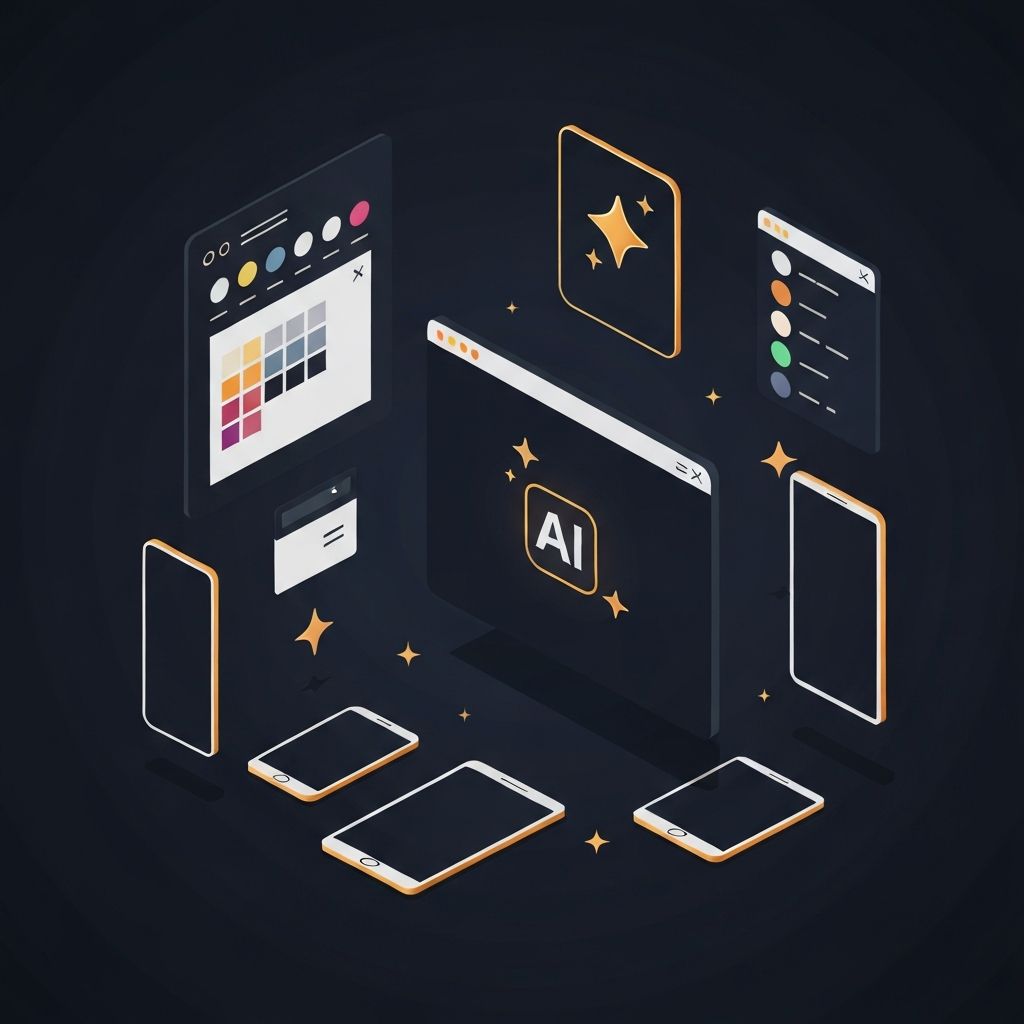
Design Is Evolving Faster Than Ever
The convergence of AI tools, modern CSS capabilities, and shifting user expectations is creating a new design paradigm. If your startup's website still looks like a 2022 template, you are leaving credibility and conversions on the table.
Here are the defining trends shaping web design in 2025-2026, and practical advice on what to adopt.
1. Dark-First Design Systems
Dark themes have moved from "alternative option" to "default choice" for tech products and SaaS applications. The reasons go beyond aesthetics:
The key to good dark design is not just inverting colors. It requires careful attention to contrast ratios, subtle gradients to create depth, and a restrained color palette where accent colors carry real meaning.
2. Glassmorphism and Layered Depth
Glassmorphism — translucent surfaces with backdrop blur — creates a sense of physical depth that flat design cannot match. When done well, it suggests layers of interface floating in space.
The technical implementation combines:
The trend has matured beyond the heavy-handed implementations of 2023. Modern glassmorphism is subtle — barely-there blur, 2-4% opacity backgrounds, and borders that only appear on hover.
3. Micro-Interactions and Motion Design
Static websites feel dead in 2026. Users expect subtle motion that confirms their actions and guides their attention:
The critical word is "subtle." The best motion design is almost invisible — it just makes the interface feel alive and responsive.
Tools like Framer Motion have made sophisticated animations accessible to every developer. The gap between "basic website" and "polished product" is now primarily one of attention to detail, not technical capability.
4. AI-Integrated Interfaces
The most interesting trend is AI becoming a visible part of the interface:
5. Responsive Typography at Scale
Modern CSS features (clamp(), container queries, fluid type scales) enable typography that scales smoothly from phone to ultrawide display:
What This Means for Your Startup
First impressions are formed in 50 milliseconds. Your website is often the first touchpoint with potential customers, investors, and partners. A dated design undermines every other signal of competence.
Practical recommendations:
2. Add subtle motion — even basic scroll reveals elevate perceived quality dramatically
3. Invest in responsive polish — test on real phones, not just browser dev tools
4. Use AI thoughtfully — integrate AI features where they add real value, not as gimmicks
5. Prioritize performance — the fanciest design is worthless if it takes 4 seconds to load
How We Build at IMAGIMATIC
Our own website (the one you are reading this on) implements many of these patterns: dark-first design, glassmorphism cards, Framer Motion scroll animations, parallax backgrounds, and responsive typography. We build what we believe in.
If your startup needs a modern web presence that communicates technical credibility, we can help. Reach out at support@imagimatic.ai.
Related Articles
What Are AI Coding Agents and Why They Matter in 2026
How AI coding assistants, vibe coding platforms, and autonomous dev agents are fundamentally changing software development workflows — and what engineering teams should do about it.

Building Intelligent Agent Applications with RAG + On-Device Inference
Combining Retrieval-Augmented Generation, local models, retrieval, and tool calling enables highly responsive, personalized apps that work without cloud dependencies.