What Are AI Coding Agents and Why They Matter in 2026
How AI coding assistants, vibe coding platforms, and autonomous dev agents are fundamentally changing software development workflows — and what engineering teams should do about it.
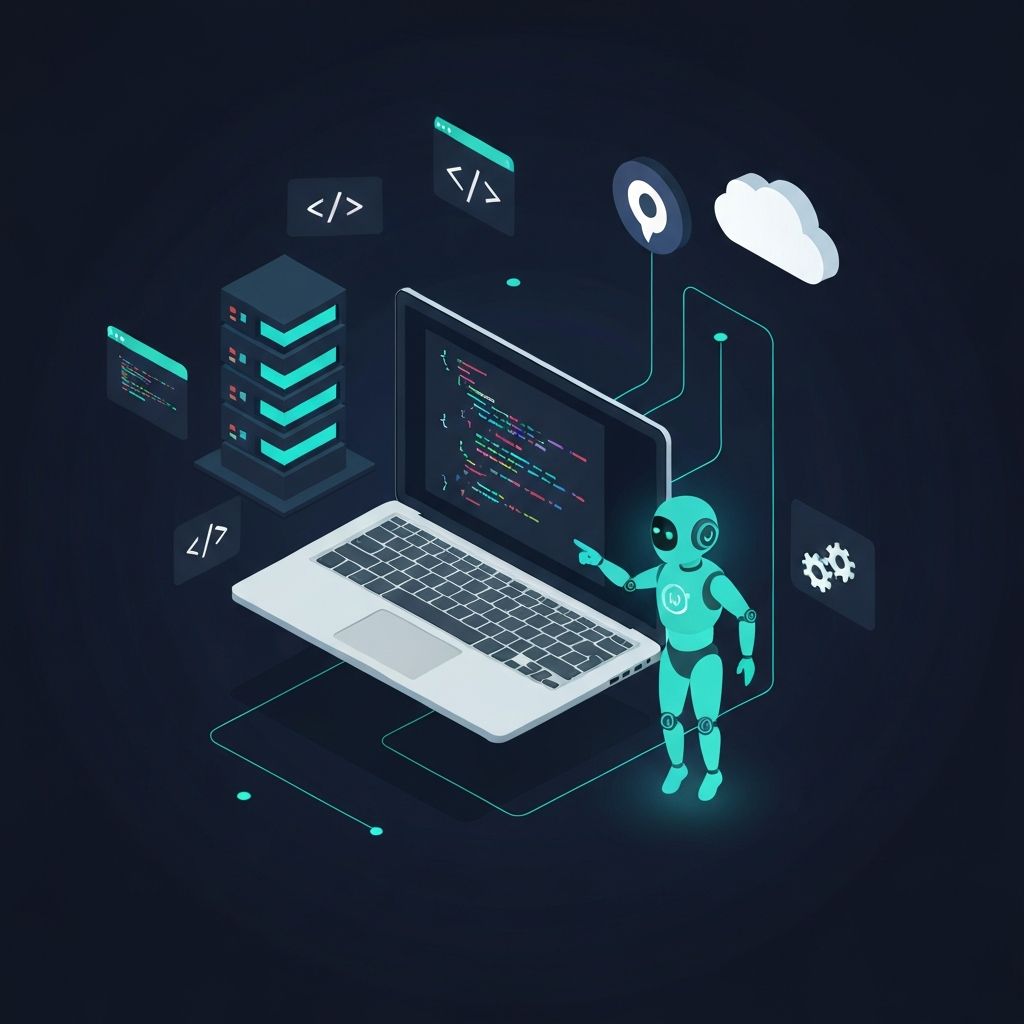
The Rise of the AI Coding Agent
The software development landscape in 2026 looks dramatically different from just two years ago. AI coding agents — autonomous or semi-autonomous systems that write, review, test, and deploy code — have moved from experimental curiosities into everyday toolchains.
Tools like Cursor's Visual Editor, GitHub Copilot Workspace, and newer entrants like Devin and SWE-Agent are not just autocomplete engines. They understand project context, navigate codebases, run tests, and iterate on their own output. This is a paradigm shift from "AI-assisted" to "AI-driven" development.
What Exactly Is a Coding Agent?
A coding agent is an AI system that goes beyond single-turn code completion. It can:
The key differentiator from earlier copilots is agency: the ability to take actions, observe results, and course-correct without human intervention at every step.
Vibe Coding: The New Workflow
"Vibe coding" — a term coined by Andrej Karpathy — describes the emerging workflow where developers describe intent in natural language and let AI agents handle implementation details. It is not about replacing developers; it is about elevating them from typists to architects.
In practice, this looks like:
2. The agent generates a plan and implementation
3. The developer reviews, provides feedback, and iterates
4. The agent handles the mechanical work of writing tests, fixing lint errors, and refactoring
Why This Matters for Engineering Teams
The implications for software teams are profound:
Velocity multipliers — Small teams can now ship features at the pace of much larger organizations. A two-person startup with good agent tooling can compete with a ten-person team.
Quality improvements — Agents do not get tired, skip tests, or forget edge cases. When properly configured, they produce consistently well-tested code.
Architecture becomes the bottleneck — When writing code is cheap, the value shifts to system design, product thinking, and technical leadership. The developers who thrive are those who can articulate clear technical vision.
New skill requirements — Prompt engineering for code, agent supervision, and AI-augmented code review are becoming essential skills.
What Teams Should Do Now
2. Train developers on agent workflows — The productivity gap between developers who use agents well and those who do not is widening
3. Rethink team structures — Smaller, more senior teams augmented by agents can outperform larger traditional teams
4. Evaluate agent platforms seriously — This is not a fad. The tooling is maturing rapidly.
Looking Ahead
By the end of 2026, we expect AI coding agents to be standard in every professional development environment. The question is not whether to adopt them, but how to integrate them most effectively into your team's workflow.
At IMAGIMATIC, we build with these tools daily and help teams modernize their development practices. The future of software engineering is collaborative — humans and agents working together.
Related Articles
Building Intelligent Agent Applications with RAG + On-Device Inference
Combining Retrieval-Augmented Generation, local models, retrieval, and tool calling enables highly responsive, personalized apps that work without cloud dependencies.
AI Web Design Trends 2025-2026 and What They Mean for Your Startup
Modern dark theme design patterns, glassmorphism, parallax micro-interactions, responsive dark UI trends, and AI integration on the web — what is shaping the future of digital design.